

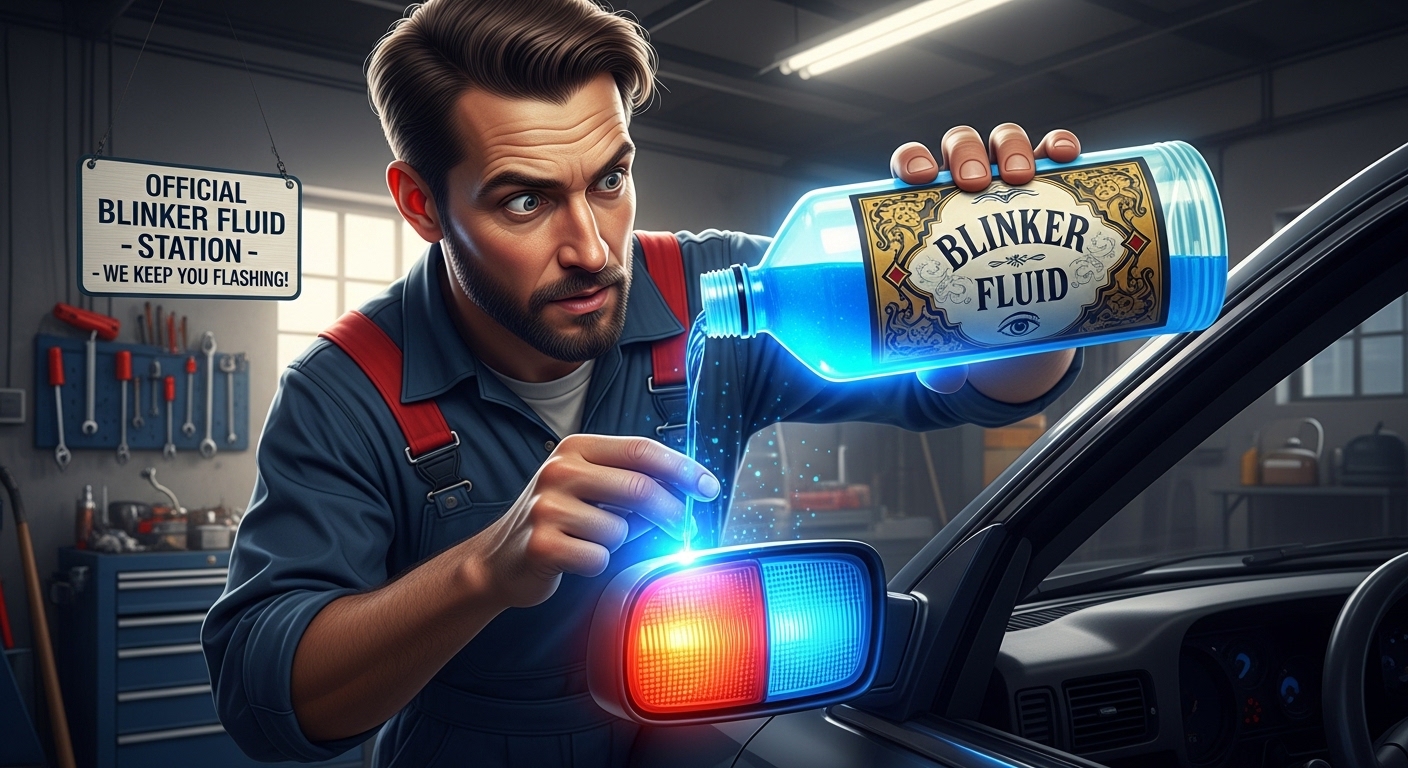
If you have ever spent time around car enthusiasts or visited an auto repair shop, you may have heard someone mention blinker fluid. The term often sounds technical and believable, especially to new drivers who are still learning about vehicle maintenance. However, confusion quickly arises when people try to locate this supposed fluid under the hood. Is it real, or is it simply a joke? Understanding the origin and purpose of blinker fluid helps clarify one of the most common automotive myths and highlights the importance of basic car knowledge.
What Is Blinker Fluid Supposed to Be
Blinker fluid is commonly described as a liquid that keeps a vehicle’s turn signals operating properly. According to the joke, it needs regular refilling to ensure that indicators flash at the correct speed. Some even claim there are different types for various car models. Despite these detailed explanations, blinker fluid does not actually exist. Modern vehicles use electrical systems to power their turn signals, which rely on bulbs, wiring, fuses, and relays. No liquid component is required for signal lights to function correctly in any standard automobile.
The Origin of the Blinker Fluid Joke
The idea of blinker fluid has been around for decades and is often used as a lighthearted prank on inexperienced drivers or new automotive students. Mechanics and seasoned car owners sometimes mention it to test whether someone understands basic vehicle systems. The humor lies in the fact that many legitimate fluids exist in a car, making the concept seem plausible at first. Over time, the joke became part of automotive culture and continues to circulate through conversations, social media, and even novelty products marketed for entertainment purposes.
Why the Myth Sounds Convincing
The blinker fluid myth sounds believable because vehicles truly depend on several essential fluids for proper operation. Engine oil lubricates moving parts, coolant regulates temperature, brake fluid ensures safe stopping, and windshield washer fluid cleans the glass. Since drivers regularly check and refill these liquids, the idea of another fluid for turn signals may not seem unusual. Additionally, the term “blinker” is a common name for turn signals in some regions, which makes the fictional product appear technically accurate. This combination of real automotive terminology and humor makes the myth effective.
How Turn Signals Actually Work
Understanding how turn signals function helps dispel any confusion about blinker fluid. Turn signals operate through an electrical circuit connected to the vehicle’s battery. When the driver activates the indicator lever, electricity flows through a flasher relay that controls the blinking pattern. The current reaches the bulbs located at the front and rear of the vehicle, causing them to flash. If a bulb burns out, the signal may blink faster as a warning sign. No fluid is involved in this process, as the entire system relies on electrical components.
Common Automotive Fluids You Should Know
Although blinker fluid is fictional, knowing about real automotive fluids is important for vehicle maintenance. Engine oil reduces friction and prevents overheating. Transmission fluid ensures smooth gear shifts. Brake fluid transfers force from the pedal to the braking system. Power steering fluid assists with steering control in older vehicles. Coolant prevents the engine from overheating or freezing in extreme temperatures. Recognizing these essential fluids helps drivers avoid confusion and ensures proper care of their vehicles. Regular maintenance checks contribute to safety, reliability, and long-term performance on the road.
The Role of Humor in Car Culture
Humor has long played a role in automotive communities, and blinker fluid is one of many playful traditions. Friendly pranks can create bonding experiences between mechanics, students, and car enthusiasts. However, the joke also highlights the importance of learning accurate information about vehicle systems. While humor can make education enjoyable, it should not replace proper knowledge. Clear communication ensures that new drivers gain confidence and avoid misunderstandings. In this way, blinker fluid serves as both a source of entertainment and a reminder to stay informed.
How to Respond If Someone Mentions Blinker Fluid
If someone seriously suggests checking or replacing blinker fluid, it is helpful to recognize the comment as a joke. Responding with curiosity can open a conversation about how turn signals truly function. For new drivers, asking questions and seeking clarification is always better than feeling embarrassed. Understanding basic car components empowers individuals to make informed decisions during maintenance or repairs. When visiting a repair shop, clear communication with certified technicians ensures transparency and trust. Awareness of common automotive myths helps drivers avoid unnecessary confusion or concern.
Learning Basic Vehicle Maintenance Skills
Becoming familiar with essential car maintenance tasks builds confidence and independence. Drivers should know how to check tire pressure, inspect fluid levels, and recognize warning lights on the dashboard. Reading the vehicle owner’s manual provides accurate information about recommended service intervals. While blinker fluid may be a humorous myth, real maintenance responsibilities are important. Taking the time to learn these fundamentals improves safety and reduces unexpected breakdowns. Knowledge also helps drivers communicate effectively with mechanics and understand repair recommendations more clearly.
Why Automotive Knowledge Matters
Understanding how vehicles operate allows drivers to separate fact from fiction. Myths like blinker fluid demonstrate how easily misinformation can spread when technical terms sound convincing. Accurate automotive knowledge promotes safer driving habits and smarter maintenance decisions. It also prevents unnecessary spending on imaginary problems. Whether you are a new driver or an experienced motorist, staying informed about basic vehicle systems enhances reliability and confidence. Education remains the most effective way to navigate both genuine car issues and lighthearted automotive jokes.
Conclusion
Blinker fluid is a well-known automotive myth that continues to entertain drivers and mechanics alike. While it may sound believable due to the presence of many real car fluids, turn signals function entirely through electrical systems. Understanding this distinction helps prevent confusion and reinforces the importance of basic vehicle knowledge. By learning how essential components work and maintaining proper care, drivers can approach car ownership with clarity and confidence. Ultimately, blinker fluid serves as a reminder that informed drivers are always better prepared on the road.