

In today’s modern work environment, comfort and productivity go hand in hand. Many professionals are searching for smarter ways to improve posture and reduce long hours of sitting. Where the concept of what is a riser desk becomes important. A riser desk offers flexibility without requiring a complete office redesign. Whether you work from home or in a corporate setting, understanding how this adjustable solution works can help you create a healthier and more efficient workspace that supports both focus and long-term well-being.
Understanding What Is a Riser Desk
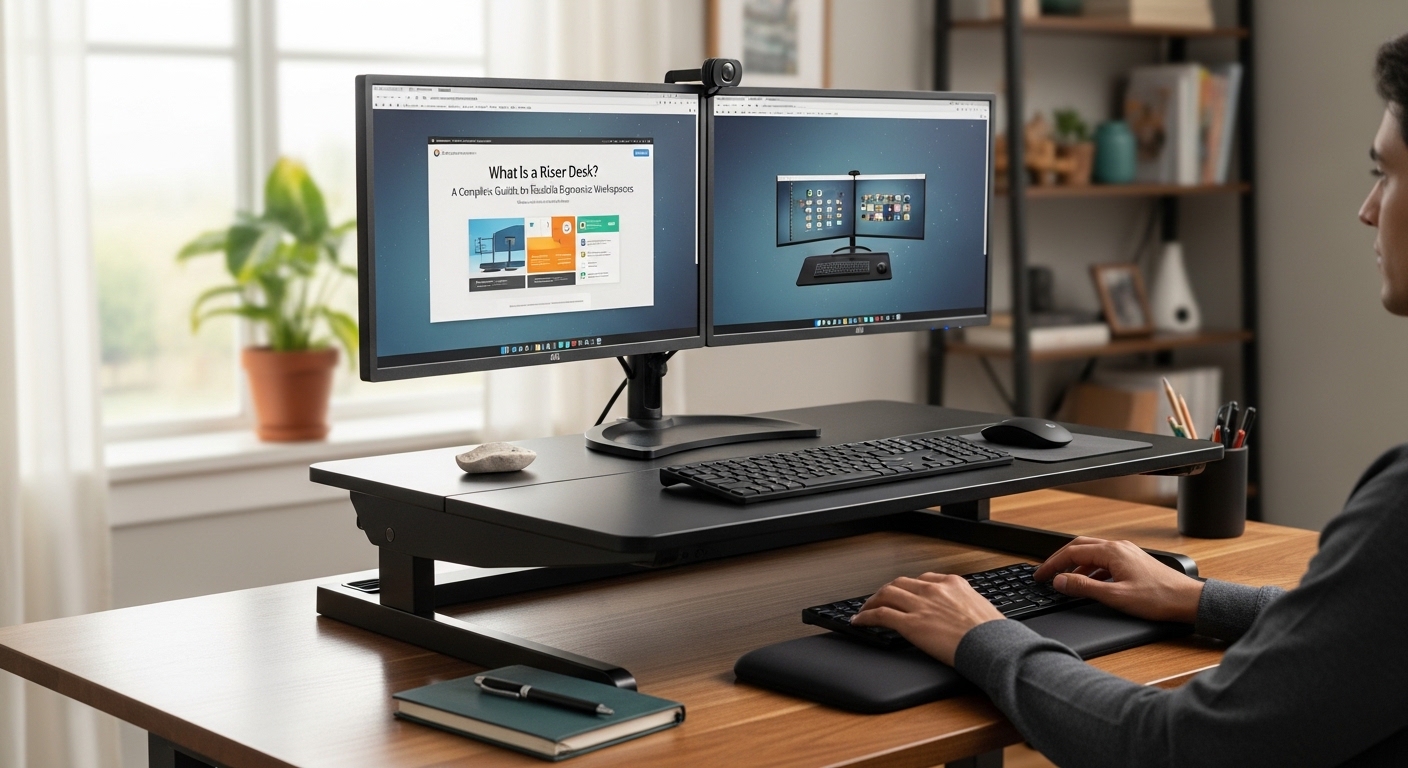
To answer the question what is a riser desk, it is essentially a height-adjustable platform placed on top of an existing desk to convert it into a standing workstation. Unlike a full standing desk, a riser desk sits above your current surface and can be raised or lowered depending on your preference. It typically holds a monitor, keyboard, and mouse, allowing users to switch between sitting and standing throughout the day. This flexible design makes it a practical solution for people who want ergonomic benefits without replacing their entire desk setup.
How a Riser Desk Works in Daily Use
A riser desk operates through a lifting mechanism that allows smooth height adjustments. Some models use manual levers or pneumatic systems, while others are electric and adjust with the press of a button. When raised, the platform elevates your screen and keyboard to a comfortable standing position. When lowered, it returns to standard sitting height. This easy transition encourages movement during the workday. By making posture changes simple and convenient, a riser desk supports better circulation and reduces the physical strain associated with remaining in one position for extended periods.
Key Benefits of Using a Riser Desk
One of the primary advantages of a riser desk is improved ergonomics. Alternating between sitting and standing can reduce back pain, neck tension, and shoulder discomfort caused by poor posture. It also helps maintain better spinal alignment and encourages more active work habits. Many users report increased energy levels and improved concentration when using adjustable desk solutions. Additionally, a riser desk can contribute to long-term health by reducing sedentary behavior. These benefits make it a valuable addition to both home offices and traditional workplace environments focused on employee wellness.
Riser Desk vs Standing Desk: What Is the Difference
When comparing a riser desk to a full standing desk, the main difference lies in structure and installation. A standing desk replaces your entire workstation and usually features built-in height adjustment mechanisms. In contrast, a riser desk is an attachment placed on top of an existing desk. This makes it more affordable and easier to set up. While both options allow users to work while standing, a riser desk offers greater flexibility for those who want to keep their current furniture. It is often ideal for renters, small offices, or shared workspaces.
Who Should Consider a Riser Desk
A riser desk is suitable for a wide range of professionals. Remote workers who spend long hours at a computer can benefit from the ability to change positions easily. Office employees looking to improve posture without requesting major equipment changes may find it a practical solution. Students who study for extended periods can also use a riser desk to maintain better focus and physical comfort. Even creative professionals such as designers and writers appreciate the flexibility it provides. Essentially, anyone seeking a more dynamic and adaptable workspace can consider this ergonomic upgrade.
Important Features to Look For
When choosing a riser desk, several features should be evaluated carefully. Stability is essential to ensure monitors and equipment remain secure during height adjustments. Weight capacity should match your devices, especially if you use multiple screens. Adjustable height range is another important factor, as it should accommodate both sitting and standing positions comfortably. Smooth lifting mechanisms contribute to ease of use and durability. Some models also include keyboard trays or cable management systems. Paying attention to these features helps ensure that your riser desk meets your functional and ergonomic needs effectively.
How to Set Up a Riser Desk Correctly
Proper setup plays a crucial role in maximizing the benefits of a riser desk. The monitor should be positioned at eye level to prevent neck strain, while the keyboard should allow your elbows to remain at a natural ninety-degree angle. When standing, your feet should rest flat on the floor and your shoulders should stay relaxed. Alternating between sitting and standing every thirty to sixty minutes can improve comfort and productivity. By adjusting your workstation carefully, you create an ergonomic environment that supports healthy posture and reduces the risk of repetitive strain injuries.
Common Misconceptions About Riser Desks
Some people believe that a riser desk automatically solves all posture problems, but correct usage is still necessary. Simply standing all day can cause fatigue if not balanced with sitting. Another misconception is that riser desks are unstable or complicated to use. Modern designs are engineered for smooth operation and reliable support. Others assume they are expensive, yet many affordable options exist for different budgets. Understanding what is a riser desk and how it truly functions helps users make informed decisions rather than relying on outdated assumptions or incomplete information.
Is a Riser Desk Worth the Investment
Determining whether a riser desk is worth the investment depends on your work habits and physical needs. For individuals who spend many hours at a desk, the ability to alternate positions can significantly enhance comfort and productivity. Compared to replacing an entire desk, what is a riser desk offers a cost-effective upgrade with meaningful ergonomic benefits. It also adapts easily to changing work environments. By promoting movement and flexibility, this adjustable solution supports both short-term comfort and long-term health, making it a practical consideration for modern professionals.
Conclusion
Understanding what is a riser desk reveals its value as a versatile and ergonomic workspace solution. It transforms a standard desk into a height-adjustable station without major expense or installation. By encouraging movement, improving posture, and supporting overall well-being, a riser desk meets the needs of today’s dynamic work culture. Whether used at home or in an office, it provides a simple yet effective way to create a healthier and more productive working environment.